The first known printing was in 3500 BC, when the Sumerians had drawn pictograms. The Sumerians were an ancient culture located in modern day Iraq and they used these pictograms to represent literal things (Ager, 2018) For example, the picture of the bird is simply drawn as a bird.

Things got slightly more complex in 3100 BC, when the Egyptians first used ideograms. They used hieroglyphs for visual representations of objects or ideas that were familiar to Egyptians,like different species of animals, parts of the human body, or varieties of food. When hieroglyphs are used to represent these things, they are now called ideograms. For example, the hieroglyph hr(pictured below), carried the meaning of “face.” However, when it is not used as an ideogram, it is the phonetic value hr and may represent the word for “on” (Noah, 2013).

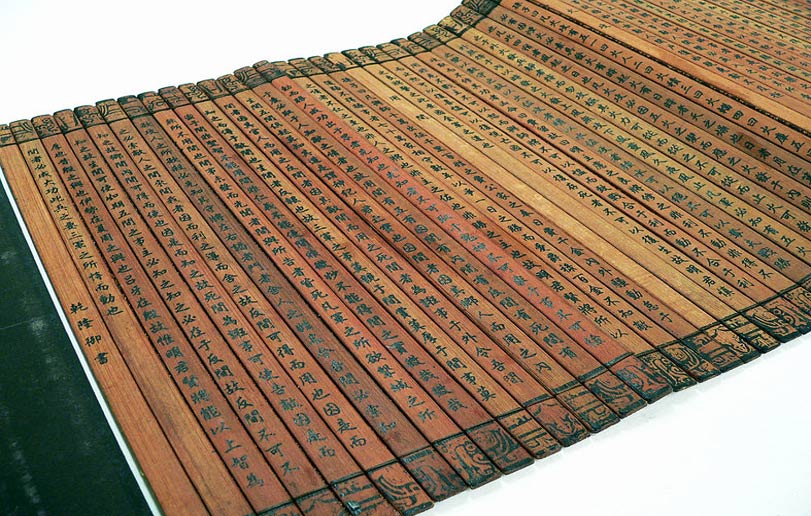
Interestingly enough, binding predates printing and paper. In 2000 BC, the Chinese wrote on single strips of bamboo called chien which where sewn together using silken cords in various colours. These bound strips formed a bundle called tsê (Wu, 2009).
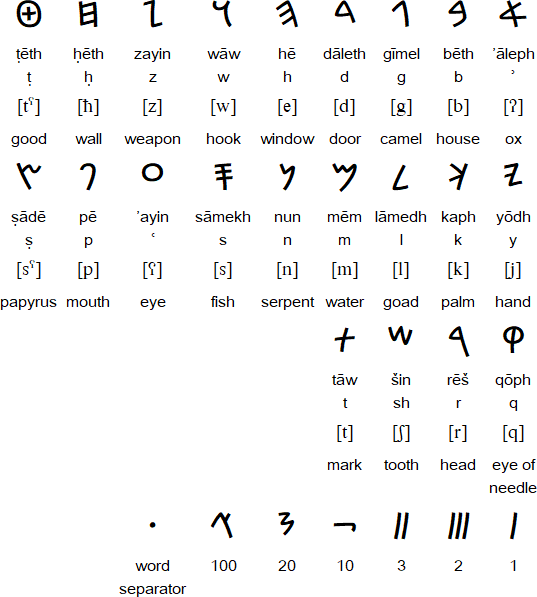
In 1600 BC, the Phoenician alphabet was created. The Phoenicians were a group of people who occupied modern day Syria, Lebanon, and northern Israel. They were often passing stories to each other and wanted a way to translate those sounds into written word, in order to keep these stories. The alphabet consisted of twenty-two letters,written from left to right, and with only consonants represented (“Phoenician Alphabet”, 2017). This alphabet was passed onto different cultures because the Phoenicians were traders who travelled around. While they sold items, they also passed along the alphabet. The alphabet was modified with each culture, which will be discussed later.
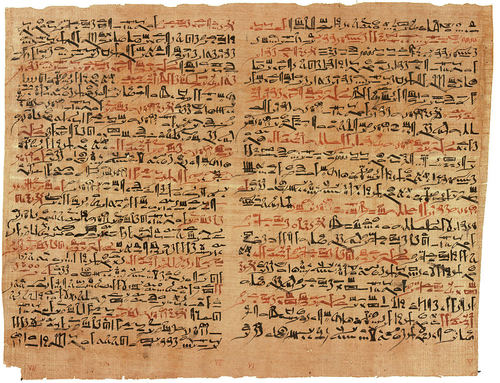
Papyrus was developed in Egypt in 1085 BC because the Egyptians wanted a medium other than stone.Obviously, stone was too heavy to carry around and much harder to show people.The papyrus plant was very important to the ancient Egyptians as it was an extracted material on which they could create and record for millennia. Essentially, the Egyptians would harvest the lower part of the stalk, as it had more pulp for a thinner sheet, the fibers would then be hammered flat, and laid out to dry in the sun. Similar to today, the price of the sheets was based on the condition of the completed sheets (“Papyrus: A Brief History”, 2016). These sheets were great for the Egyptians as they were light, strong, thin, and relatively durable. Papyrus soon after dominated Europe as it remained the standard in Europe for many years, until the arrival of parchment in the second century AD.
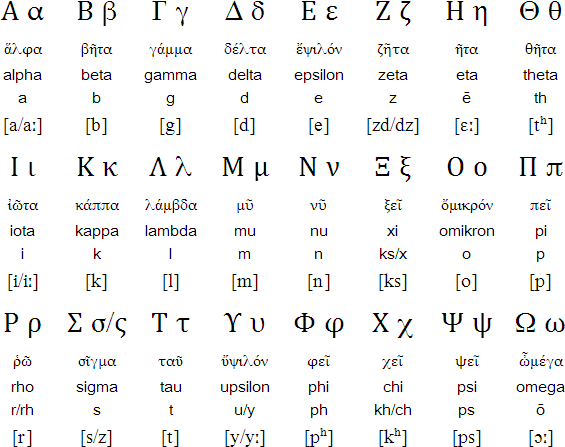
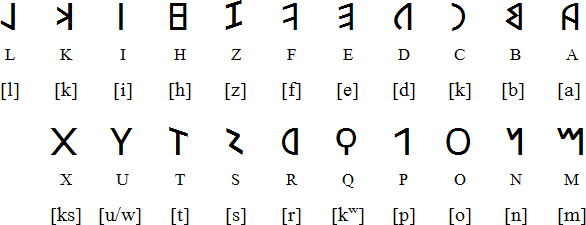
By 1000 BC, the Greeks and Romans had adopted the Phoenician alphabet and made it their own. The Greeks developed a writing system composed of individual signs arranged in a linear fashion that could represent both consonants and vowels. They dropped any sign that did not have an equivalent in the Greek language and used them for vowel sounds. This is why the Greek vowel letters A (alpha), E (epsilon), I(iota), O (omicron), Y (upsilon), and H (eta) came into being (Violatti, 2015).This writing system could, for the first time, represent speech in an absolute and unambiguous manner. The Roman or Latin alphabet had added lowercase letters and punctuation. And thanks to the vastness of the Roman empire, they were able to expose more civilizations to their alphabet. This writing system became today’s alphabet. These alphabets were important to the modern print industry because we would not have anything to print without them.

 Printing Fanatic