By 100 AD, the Romans had a thriving book industry. From this, there emerged the first Roman publishers. Because of their large empire, they were able to produce many handwritten books. Book merchants paid teams of slaves to copy out selected manuscripts (Simkin, 2014).Publishers made money because they did not have to pay money to the author of the book as there were no copyright laws in the Roman Empire. Writers could only make money if they were sponsored by a wealthy Roman, called the patron.This patron controlled what the author wrote and the writer would have to give readings to the patron’s friends at parties. (Simkin)
One of the most shocking things to happen in the history of printing was in 105 AD. Paper was invented in China by Ts’ai Lun. He developed the idea of forming sheets of paper from macerated tree bark, hemp, old rags, and just about anything that was really fibrous. The creation was found to be superior in writing quality to cloth made of the principal writing surface of the time, pure silk. It was also much less expensive to produce and had more abundant sources (“Cai Lun”, 2017).
By far, the most important thing to happen to print was when Johannes Gutenberg created the first printing press in 1450 AD. In his print shop in Mainz, Germany, Gutenberg converted a wine press into a printing press. This innovation allowed him to commercialize printing. There were a series of lead stamps that were letters. These stamps were placed backwards and upside down in a typesetter, which was then fed into the press. A very viscous ink was then rolled onto the letters. A sheet of paper was placed on top of the stamps and a lever was pulled, bringing down 500 kilograms of pressure. This pressure made sure that all of the ink was transferred onto the paper. The paper was peeled off and left to dry and the process started all over again.
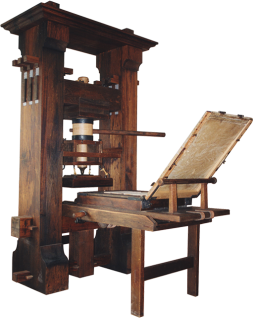
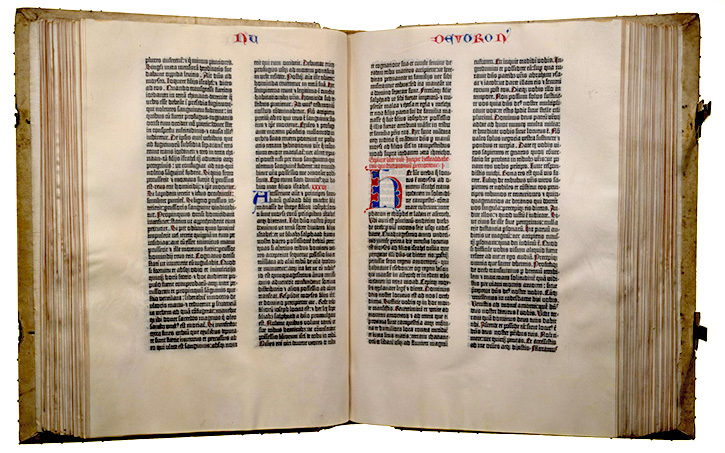
Gutenberg had about 25 people working in his shop and each was paid a fare wage, which was rather new at the time. A boy putting paper in the machine would get paid less than the man setting type. In 1455, the first book was printed, the Gutenberg bible. It was a 42-line bible in which the black text was printed but all of the illumination was done by hand. By 1500, there were 10 million printed books, which was pretty incredible for only a 50-year difference. There were 3500 different titles in production (Lecture Notes, 2018).
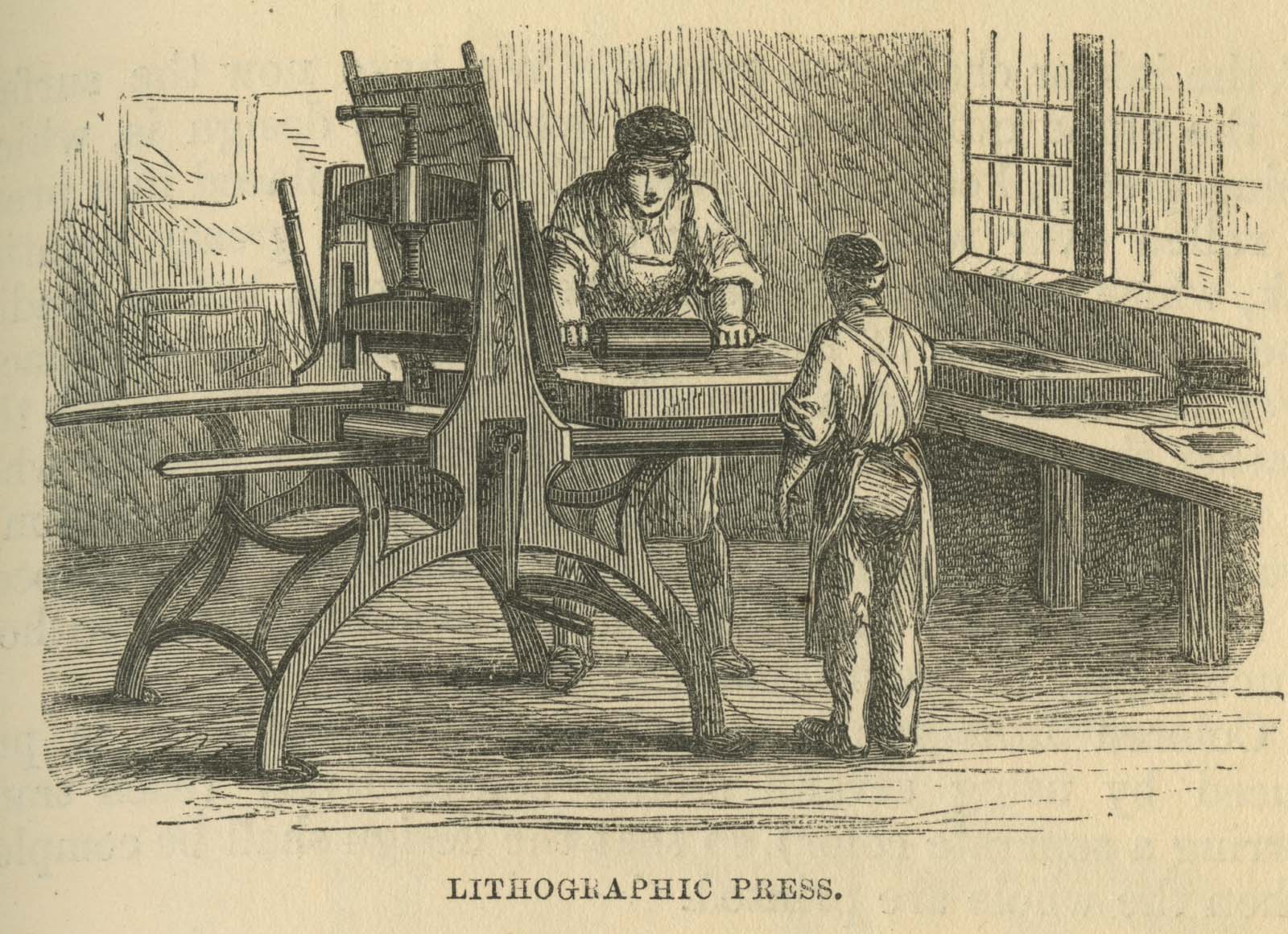
To blow Gutenberg out of the water, Alois Senefelder created lithography in 1789. This was a printing method based on the principle that ink and water do not mix. An image is printed onto a special plate and a dampening solution is applied. This solution only sticks to the non-image area as there is a special coating on the ink that is hydrophobic and will repel the water. Then the viscous ink is applied, it repels the water and sticks to the image area as the main layer of ink is oleophilic and will attract oils. The ink is transferred onto the paper and is then dried. This is a much more time effective and easy way to print. This method also allows for the reproduction of much more complex images (Lecture Notes,2018).

 Printing Fanatic