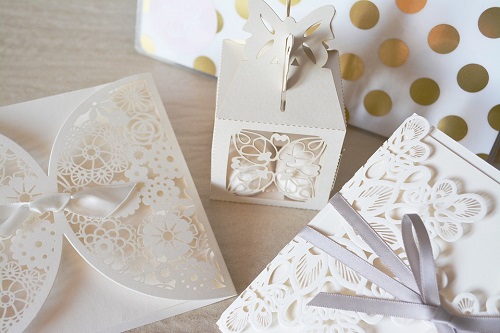
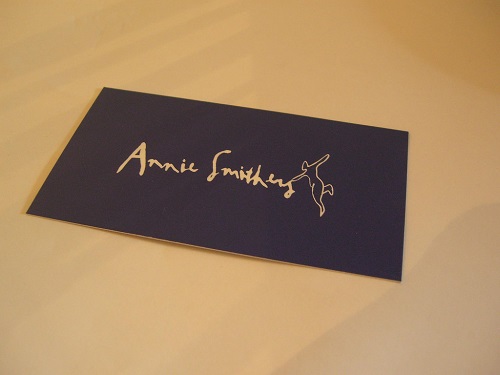
In today’s printing industry, we have a bigger variety of everything from substrates to inks and everything in between. We are now able to burn images into wood with lasers. We can die cut intricate designs into boxes and present amazing creations inside of them. One of my personal favourites is foil stamping, it allows for a clean and extra wow factor that is really beautiful. The previous inventors of printing techniques could never imagine the new ideas that have emerged.
By 100 AD, the Romans had a thriving book industry. From this, there emerged the first Roman publishers. Because of their large empire, they were able to produce many handwritten books. Book merchants paid teams of slaves to copy out selected manuscripts (Simkin, 2014).Publishers made money because they did not have to pay money to the author of the book as there were no copyright laws in the Roman Empire. Writers could only make money if they were sponsored by a wealthy Roman, called the patron.This patron controlled what the author wrote and the writer would have to give readings to the patron’s friends at parties. (Simkin)
One of the most shocking things to happen in the history of printing was in 105 AD. Paper was invented in China by Ts’ai Lun. He developed the idea of forming sheets of paper from macerated tree bark, hemp, old rags, and just about anything that was really fibrous. The creation was found to be superior in writing quality to cloth made of the principal writing surface of the time, pure silk. It was also much less expensive to produce and had more abundant sources (“Cai Lun”, 2017).
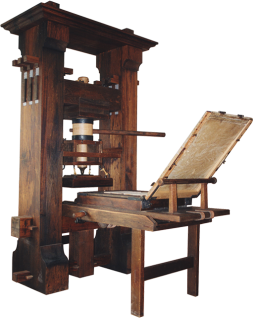
By far, the most important thing to happen to print was when Johannes Gutenberg created the first printing press in 1450 AD. In his print shop in Mainz, Germany, Gutenberg converted a wine press into a printing press. This innovation allowed him to commercialize printing. There were a series of lead stamps that were letters. These stamps were placed backwards and upside down in a typesetter, which was then fed into the press. A very viscous ink was then rolled onto the letters. A sheet of paper was placed on top of the stamps and a lever was pulled, bringing down 500 kilograms of pressure. This pressure made sure that all of the ink was transferred onto the paper. The paper was peeled off and left to dry and the process started all over again.
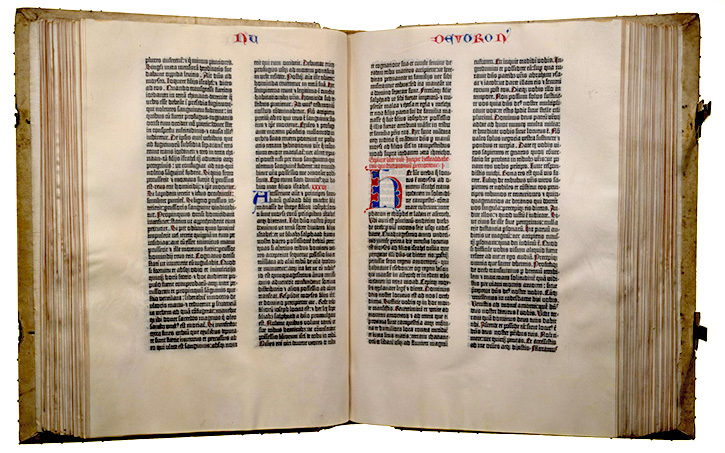
Reproduction of Gutenberg Printing PressGutenberg Bible
Gutenberg had about 25 people working in his shop and each was paid a fare wage, which was rather new at the time. A boy putting paper in the machine would get paid less than the man setting type. In 1455, the first book was printed, the Gutenberg bible. It was a 42-line bible in which the black text was printed but all of the illumination was done by hand. By 1500, there were 10 million printed books, which was pretty incredible for only a 50-year difference. There were 3500 different titles in production (Lecture Notes, 2018).
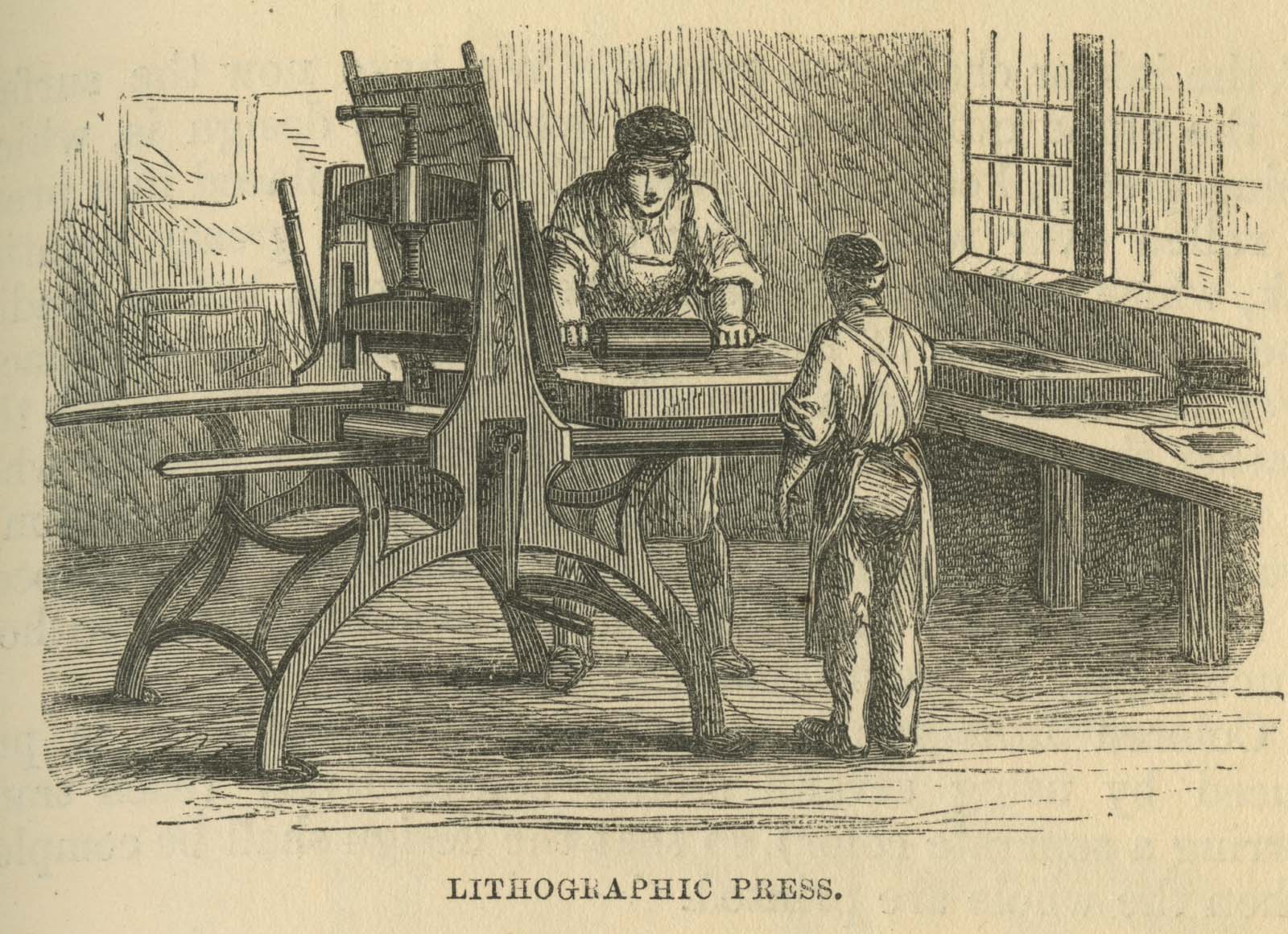
To blow Gutenberg out of the water, Alois Senefelder created lithography in 1789. This was a printing method based on the principle that ink and water do not mix. An image is printed onto a special plate and a dampening solution is applied. This solution only sticks to the non-image area as there is a special coating on the ink that is hydrophobic and will repel the water. Then the viscous ink is applied, it repels the water and sticks to the image area as the main layer of ink is oleophilic and will attract oils. The ink is transferred onto the paper and is then dried. This is a much more time effective and easy way to print. This method also allows for the reproduction of much more complex images (Lecture Notes,2018).
The first known printing was in 3500 BC, when the Sumerians had drawn pictograms. The Sumerians were an ancient culture located in modern day Iraq and they used these pictograms to represent literal things (Ager, 2018) For example, the picture of the bird is simply drawn as a bird.
Examples of Pictograms
Things got slightly more complex in 3100 BC, when the Egyptians first used ideograms. They used hieroglyphs for visual representations of objects or ideas that were familiar to Egyptians,like different species of animals, parts of the human body, or varieties of food. When hieroglyphs are used to represent these things, they are now called ideograms. For example, the hieroglyph hr(pictured below), carried the meaning of “face.” However, when it is not used as an ideogram, it is the phonetic value hr and may represent the word for “on” (Noah, 2013).
Egyptian Ideograms
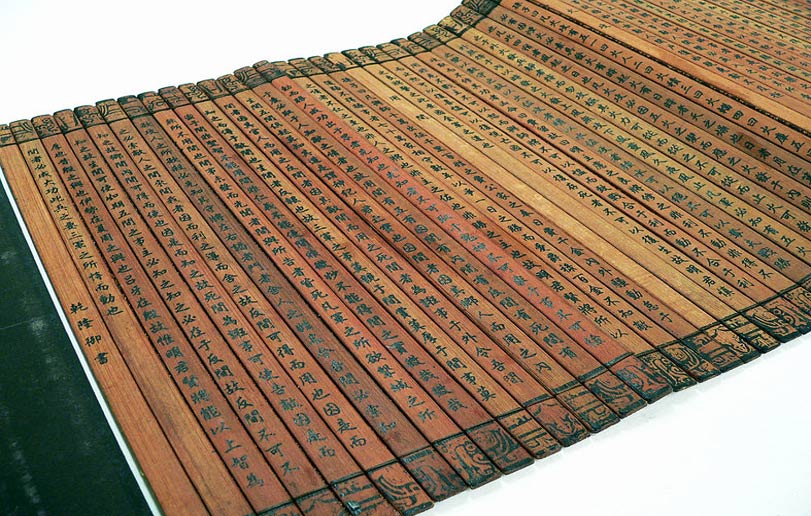
Interestingly enough, binding predates printing and paper. In 2000 BC, the Chinese wrote on single strips of bamboo called chien which where sewn together using silken cords in various colours. These bound strips formed a bundle called tsê (Wu, 2009).
Wooden Tablet
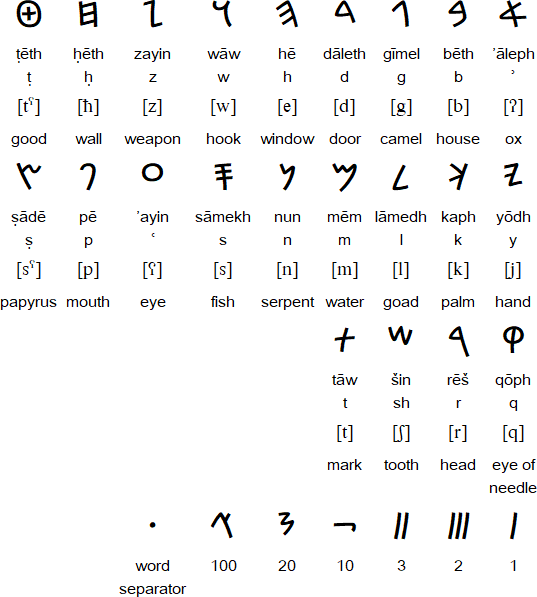
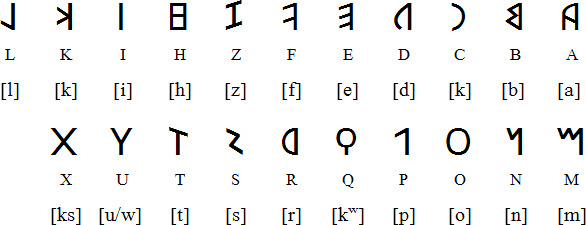
In 1600 BC, the Phoenician alphabet was created. The Phoenicians were a group of people who occupied modern day Syria, Lebanon, and northern Israel. They were often passing stories to each other and wanted a way to translate those sounds into written word, in order to keep these stories. The alphabet consisted of twenty-two letters,written from left to right, and with only consonants represented (“Phoenician Alphabet”, 2017). This alphabet was passed onto different cultures because the Phoenicians were traders who travelled around. While they sold items, they also passed along the alphabet. The alphabet was modified with each culture, which will be discussed later.
Phoenician Alphabet
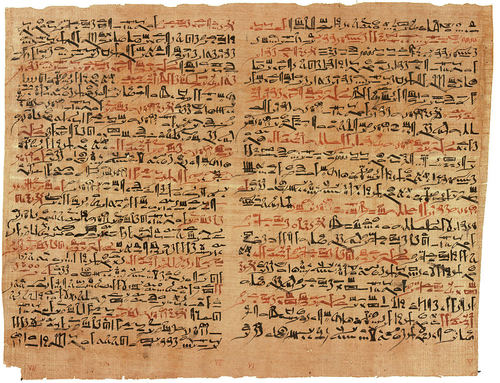
Papyrus was developed in Egypt in 1085 BC because the Egyptians wanted a medium other than stone.Obviously, stone was too heavy to carry around and much harder to show people.The papyrus plant was very important to the ancient Egyptians as it was an extracted material on which they could create and record for millennia. Essentially, the Egyptians would harvest the lower part of the stalk, as it had more pulp for a thinner sheet, the fibers would then be hammered flat, and laid out to dry in the sun. Similar to today, the price of the sheets was based on the condition of the completed sheets (“Papyrus: A Brief History”, 2016). These sheets were great for the Egyptians as they were light, strong, thin, and relatively durable. Papyrus soon after dominated Europe as it remained the standard in Europe for many years, until the arrival of parchment in the second century AD.
Ancient Papyrus
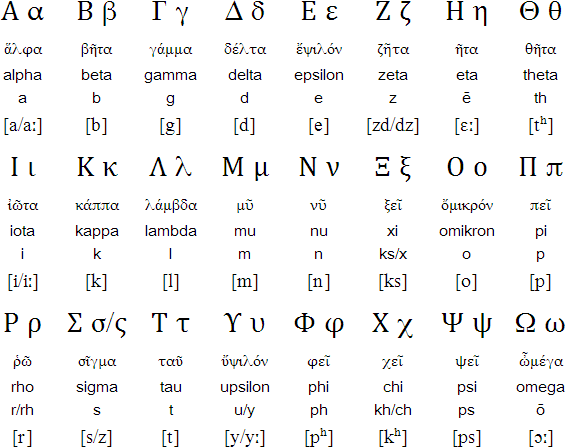
By 1000 BC, the Greeks and Romans had adopted the Phoenician alphabet and made it their own. The Greeks developed a writing system composed of individual signs arranged in a linear fashion that could represent both consonants and vowels. They dropped any sign that did not have an equivalent in the Greek language and used them for vowel sounds. This is why the Greek vowel letters A (alpha), E (epsilon), I(iota), O (omicron), Y (upsilon), and H (eta) came into being (Violatti, 2015).This writing system could, for the first time, represent speech in an absolute and unambiguous manner. The Roman or Latin alphabet had added lowercase letters and punctuation. And thanks to the vastness of the Roman empire, they were able to expose more civilizations to their alphabet. This writing system became today’s alphabet. These alphabets were important to the modern print industry because we would not have anything to print without them.
Hi there! My name is Amanda Arone and I am creating this blog to inform all of you about the evolution of printing. I find it to be really fascinating because it led to one of the most vast industries we know today.


 Printing Fanatic